
Technical Articles
Fused Ceramic Sand for Resin Sand Casting
LLSC supplies fused ceramic sand for resin sand casting — AFS 10–110, trial orders welcome, COA and sieve report with every batch. For foundries worldwide.
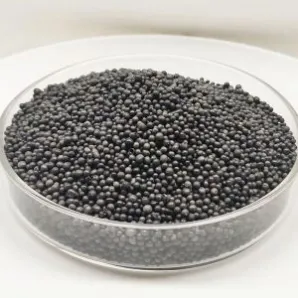
BLUF
LLSC New Material supplies fused ceramic sand for steel, iron and non-ferrous casting, available for trial orders and supplied to foundries worldwide. Resin sand casting — the no-bake and cold-box processes that bind sand with a liquid resin instead of clay or oil — is the workhorse moulding method for single pieces, small batches and large castings, and the sand carries the binder, the curing chemistry and the mould face all at once. This article explains how the process works, what the sand has to do, and which LLSC grades fit it. Every figure in this article is taken from LLSC's published product pages, so a buyer can check each number against the product page before ordering. LLSC produces 60,000 tonnes of ceramic sand a year, so a grade that trials well can be supplied at volume.
- Process Overview
Resin sand casting covers the family of chemically bonded sand processes. In the no-bake version, sand is mixed with a liquid resin and a catalyst — most commonly a furan resin with an acid catalyst, or an alkaline phenolic resin — then packed around the pattern and left to harden at room temperature. In the cold-box version, sand mixed with a phenolic urethane resin is blown into a core box and hardened in seconds by a gas catalyst. Either way there is no green sand, no clay bond and no drying oven: the resin film on each grain is the bond, and the mould is ready to pour once the resin has cured.
Once cured, the mould is stripped from the pattern, cores are set, and the two halves are closed and clamped. The mould holds its strength while it waits for pouring, and after the metal has solidified it breaks down under light shakeout, freeing the casting with far less hammering than a clay-bonded mould needs. Moulds should be poured reasonably soon after curing and kept dry in the meantime, because a resin-bonded mould left in damp air absorbs moisture and loses surface strength — a storage point worth remembering on a humid shop floor.
That combination is why resin sand is the standard choice for steel castings, large iron castings, hydraulic parts, valve bodies, pump housings and machine tool castings — jobs where accuracy matters and the batch is too small for a mechanised green sand line.
But the process puts a chemical job on the sand as well as a mechanical one. The resin has to coat every grain in a thin, even film, cure on schedule, and hold the mould together until the metal has solidified. A sand that fights the chemistry — by soaking up catalyst, demanding extra resin, or expanding and cracking as the metal heats it — turns a precise process into scrap. Sand choice in resin sand is therefore a process decision, not a purchasing detail.
- Core Advantages of Fused Ceramic Sand for Resin Sand Casting
2.1 Spherical Grain for Lower Resin Demand
A round grain has less surface area per tonne than an angular grain of the same size, so the same mould needs less resin to coat every grain with a bonding film. LLSC's fused grades publish roundness and sphericity of 0.95 with an angle factor of 1.0 — near-spherical grains that take a thin, even resin coat instead of a thick one pooled in the corners of angular grains. The saving is made on the resin, not claimed on the sand price: resin is the expensive part of a resin sand mould, and a sand that coats evenly is the cheapest place to save it. This article sticks to the process and the grades.
2.2 Low Acid Demand Value for Stable Curing
In furan no-bake sand, the acid catalyst starts the cure, and any sand that consumes acid before the resin sees it throws the curing schedule off — slow strips in summer, short bench life in winter, and moulds that cure unevenly through the section. The acid demand value measures exactly that appetite for acid. LLSC's fused grades publish an acid demand value of 1.15–1.21 ml, listed on the product pages as "low acid demand value, easy shakeout". A low, stable acid demand means the catalyst dose set on Monday still cures the same mould on Friday, and a new batch does not force the foundry to re-tune its resin and catalyst additions. It is the single most resin-specific property on the product page, and the one to check first when a sand is being considered for a furan line. For cold-box work the acid demand matters less, because the cure is driven by gas rather than by acid in the mix, but a low value is still a useful check that a batch matches its grade.
2.3 Ultra-Low Thermal Expansion to Eliminate Veining Defects
Resin sand moulds are rigid, and a rigid mould shows expansion defects clearly: when the mould face heats up and expands, it cracks, and metal runs into the cracks and freezes as veins on the casting surface. Quartz expands sharply when it changes crystal form at high temperature, which is a known cause of veining and scabbing in resin sand moulds. Fused ceramic sand has far lower thermal expansion than silica sand and does not go through that crystal change, so the mould face stays dimensionally stable while the metal is poured. The result is a cleaner casting surface and less grinding after shakeout, especially on thick-section steel castings and high-quality ductile iron castings where the mould face stays hot the longest.
2.4 High Refractoriness and Anti-Burn Sand Performance
With high-alumina composition, fused ceramic sand possesses refractoriness of 1847–1852°C, measured across LLSC's 20#, 25# and 75# grades. It is chemically stable and hardly reacts with high-temperature molten iron or steel. It prevents both mechanical and chemical sand adhesion, which keeps the casting surface clean and cuts the post-grinding and cleaning workload. In resin sand this matters twice over: the mould face is a resin-bonded skin with no clay to absorb heat, so the sand itself has to stand up to the metal, and a sand that sinters or sticks leaves the foundry grinding a surface that a better sand would have left clean.
2.5 High Wear Resistance and Excellent Reclamation Performance
Resin sand only pays for itself if the sand comes back. After shakeout the used sand carries a film of burnt resin, and reclamation — usually mechanical, by rubbing and screening the grains clean — has to strip that film without breaking the grains. Compact fused spherical structure ensures high hardness and crushing resistance. LLSC's fused grades measure Moh's hardness 7.69–7.78 across the three measured grades, so the grains survive handling and reclamation cycles instead of breaking down into fines that raise dust and binder demand. A foundry that reclaims its sand should ask LLSC for the reclamation behaviour of the grade it plans to use and run the trial batch through its own reclamation line before committing to volume, because the saving only counts if it holds up on that foundry's own equipment.
- What the Sand Is: Measured Properties
LLSC's fused ceramic sand is made by melting high-quality bauxite in an electric arc furnace. The product pages publish the same chemical composition for the fused grades, and the same grain shape, with the performance values measured grade by grade. The table below summarises the three grades read from the live product pages on 21 November 2026.
Item | 20# | 25# | 75# |
|---|---|---|---|
AFS value | 9.8 | 23.6 | 78.7 |
Refractoriness | 1852°C | 1852°C | 1847°C |
Angle factor | 1.0 | 1.0 | 1.0 |
pH | 7.48 | 7.45 | 7.33 |
Moh's hardness | 7.71 | 7.78 | 7.69 |
Roundness | 0.95 | 0.95 | 0.95 |
Sphericity | 0.95 | 0.95 | 0.95 |
Bulk density | 1.85 g/cc | 1.89 g/cc | 1.89 g/cc |
Apparent density | 3.38 g/cc | 3.39 g/cc | 3.41 g/cc |
Acid demand value | 1.15 ml | 1.15 ml | 1.21 ml |
Peter confirmed on 2026-11-21 that AFS 9.8 is the correct value for 20#. The sieve distribution table image on the product page printed 8.63 for #20 in error and is being corrected.
The chemical composition published on the product pages is the same for the fused grades:
Item | Content |
Al2O3 | 73.2% |
Fe2O3 | 1.98% |
K2O | 0.25% |
High alumina content is what gives the sand its refractoriness, and the low iron oxide content keeps the chemistry stable across alloys. The product pages do not publish a SiO2 figure for these grades, so this article does not state one; ask LLSC for the full composition sheet if a specification requires it.
Choosing the Grade for Resin Sand
Resin sand is used in the middle of LLSC's range, because the mould face sets the surface finish and the resin film needs a grain size that coats evenly without drinking binder. A grade that is too coarse leaves a rough mould face and an open structure that the metal can penetrate; a grade that is too fine raises the surface area, drinks resin, slows gas escape and risks gas defects. So the starting point for resin sand is the middle grades, and the buyer moves coarser for large castings or finer for thin walls and cores.
SPEC | 30 mesh (600 µm) | 40 (425) | 50 (300) | 70 (212) | 100 (150) | 140 (106) | AFS |
|---|---|---|---|---|---|---|---|
#30 | 25 | 44.5 | 18 | 3 | 1 | | 28.6 |
#40 | 4 | 35 | 45 | 10 | 5 | 1 | 38.8 |
#50 | 1 | 18 | 28 | 30 | 12 | 9 | 52 |
#60 | | 8 | 23 | 35 | 20 | 10 | 58.29 |
#30 and #40 cover general iron and steel casting on resin sand lines, with #40 holding 45% on 50 mesh — a tight, middle-of-the-range distribution for everyday production. #30 is the coarser of the two: 25% on 30 mesh and 44.5% on 40 mesh, an open structure for larger castings where gas must escape quickly and the mould face has room to breathe. #50 and #60 are the working grades for smaller castings and cores, where the mould face needs to be smoother: #50 holds 30% on 70 mesh and 28% on 50 mesh, and #60 holds 35% on 70 mesh and 20% on 100 mesh. The full range runs from #20 (AFS 9.8) at the coarse end to #100 (AFS 110.2) at the fine end, so a foundry can move one grade finer or coarser without jumping to a different sand system, and the sieve distribution can be customised to a customer's required AFS value.
Permeability is the other half of the grade decision. Resin sand moulds are dense and rigid, so the gas generated by the resin and the metal has fewer easy paths out than in a green sand mould. A coarser grade passes gas faster; a finer grade holds a smoother face but slows the gas down. That is why large castings with long pouring times start coarse, and why a foundry that moves finer for surface finish should check venting and pouring speed at the same time, rather than changing the grade alone.
Two practical notes on grade choice. First, moulds and cores do not always take the same grade: a core blown in a cold-box machine usually runs one grade finer than the mould sand around it, because the core face is the casting's internal surface and the blowing process packs fine sand well. Second, when in doubt between two adjacent grades, ask LLSC to confirm against the casting size, wall thickness and alloy, and start with a trial order on one casting type, comparing sand adhesion, surface finish and scrap rate against the current sand.
Resin Sand, Coated Sand and Lost Foam: Not the Same Job
Three processes share the word resin and are easy to confuse, so the distinction is worth one section. Resin sand, the subject of this article, mixes sand with liquid resin and catalyst at the moulding station and cures at room temperature or with gas — the foundry controls the resin dose on its own line. Coated sand, also called precoated or shell sand, arrives from the supplier with the resin already coated on the grains and is cured by heat in a hot-box or shell process; LLSC covers it in a separate article on ceramic sand in precoated sand. Lost foam casting uses dry, unbonded sand with no resin at all, and LLSC's fused grades serve it as a filling sand. The three processes share the same sand chemistry — round grains, low expansion, high refractoriness — but they buy different grades and judge the sand on different properties: acid demand leads in resin sand, coating behaviour leads in coated sand, and permeability leads in lost foam. A buyer who orders one grade for all three jobs will judge it on the wrong test.
Fused Ceramic Sand vs Silica Sand in Resin Sand
Silica sand is the default resin sand because it is cheap and available, and it works — up to a point. Its limits in this process are well known. Quartz expands sharply at high temperature, so the rigid resin mould face cracks and veins. Angular silica grains present more surface area, so they demand more resin to coat. Silica softens at lower temperatures than ceramic sand, so the mould face is more likely to sinter and stick to the casting. And angular grains crush into fines under reclamation, which chokes permeability, raises dust and pushes binder demand up again on the next cycle.
Fused ceramic sand answers each of those points with measured properties rather than a claim. Refractoriness of 1847–1852°C against steel and iron pouring temperatures. Near-spherical grains, roundness and sphericity 0.95, that take a thin, even resin film. Thermal expansion far lower than silica sand, which keeps the mould dimensions stable while the metal is poured. Hard grains, Moh's hardness 7.69–7.78, that survive reclamation instead of breaking down into fines. And an acid demand value of 1.15–1.21 ml, which keeps furan curing on schedule instead of fighting the catalyst.
The honest boundary is price: ceramic sand costs more per tonne than silica sand, and this article does not pretend otherwise. The case for it is made on the casting and on the resin, not on the sand price — less resin per mould, less sand adhesion and cleaning work, fewer gas and veining defects and less scrap, and sand that comes back for the next mould instead of going to waste. A foundry judges that case on its own line, on a real trial, not on a brochure. That is why LLSC offers trial orders with a COA and sieve report for every batch.
For general foundry work where cost matters more than the highest refractoriness, LLSC also supplies sintered ceramic sand: the SC1 grade is a spherical sand made from high-alumina bauxite, with published refractoriness of 1800°C and above. The choice between fused and sintered is made by casting type and budget, not by what one supplier happens to stock.
What to Check Before Ordering
- Grain size distribution, not only the AFS number — the distribution decides permeability and surface finish, and the three-adjacent-sieve concentration is the quickest check that a batch matches its grade.
- Acid demand value — the published range is 1.15–1.21 ml; a batch that moves far from that range is worth querying before the sand goes into a furan line, because it changes the curing schedule.
- Roundness and sphericity of the grains — round grains flow and pack more evenly and take a thinner resin film; the published figures for LLSC's fused grades are 0.95 for both.
- Refractoriness — the published range is 1847–1852°C for the fused grades; a batch COA that moves far from that range is worth querying before the sand goes into production.
- pH — the published range is 7.33–7.48, near neutral, which keeps the curing chemistry stable; a strongly alkaline or acidic batch is worth querying.
- COA and sieve report with each batch — ask for them before payment, not after delivery, and check the sieve report against the distribution table in this article, not only against the AFS number.
- Trial order availability — a small trial order on real production is worth more than a sample bag on a desk.
- Packaging and labelling — confirm bag weight, palletising and batch marking before shipment; LLSC packs in 25 kg woven bags or 1,000 kg jumbo bags, so confirm which pack the trial quantity ships in.
How a Trial Order Works
- Tell LLSC the casting alloy, casting size and wall thickness, the resin system in use (furan no-bake, cold-box or alkaline phenolic) and the AFS grade now in use.
- LLSC confirms a suitable AFS grade and trial quantity.
- The trial batch ships with its COA and sieve report.
- Run it on real production — same resin dose, same catalyst, same strip time — and compare resin consumption, sand adhesion, surface finish and scrap rate with the current sand.
- Confirm the grade and volume for regular supply.
FAQ
What grade of fused ceramic sand suits resin sand casting?
Start in the middle: #30 (AFS 28.6) or #40 (AFS 38.8) for general iron and steel work on resin sand lines. Move to #50 or #60 for smaller castings and cores, and coarser to #25 only for large castings where gas escape matters more than surface finish.
Does it work for both no-bake and cold-box processes?
Yes. The same grades serve furan no-bake moulds and phenolic urethane cold-box cores. The grade choice follows the casting and the mould face, not the curing method; the acid demand value matters most on a furan line and least on a cold-box line.
Will it reduce my resin consumption?
Round grains present less surface area per tonne than angular grains, so the same mould needs less resin to coat every grain. The size of the saving depends on the current sand, the resin system and the mould geometry, so LLSC does not quote a percentage — trial it on one casting type and measure the resin dose against the current sand.
Can fused ceramic sand replace silica sand in an existing resin sand line?
Yes. It is a drop-in moulding sand — same mixer, same resin, same catalyst, same strip time. Trial it on one casting type and compare resin consumption, adhesion, surface finish and scrap rate against silica sand.
Is the sand reusable after shakeout?
Yes, with mechanical reclamation. The grains are hard and round (Moh's hardness 7.69–7.78), which helps them survive reclamation instead of breaking down into fines. Run the trial batch through your own reclamation line before committing to volume.
How do I get a quotation?
Send an enquiry with the casting alloy, casting size, resin system, AFS grade or moulding process, quantity and destination port, and LLSC will reply with a quotation.
Enquiry CTA
Contact LLSC New Material for a quotation or a trial order. Tell us your casting alloy, casting size, resin system and quantity, and we will reply with a quotation and a COA and sieve report for the trial batch.