
Aug 10, 2026Technical Articles
Ceramic fused sand Application in Lost Foam Casting
The Advantages of Applying Ceramic Fused Sand to Lost Foam Casting
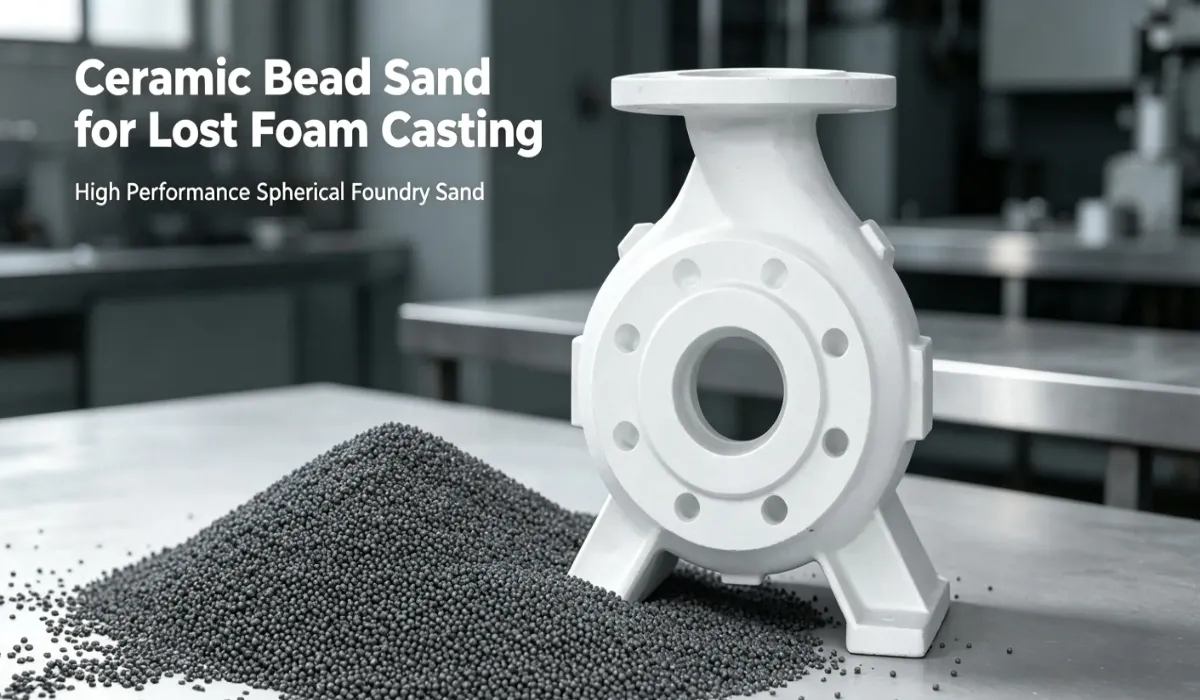
1. Process Overview
Lost foam casting uses expendable polystyrene foam patterns buried in dry sand, with molten metal replacing the foam during pouring to form complex castings. Traditional silica sand is widely used yet troubled by veining, sand burning and high recycling loss. Ceramic fused sand, as a spherical high-alumina artificial foundry sand, has been gradually promoted for lost foam production due to its stable high-temperature performance and excellent reusability.
2. Core Advantages of Ceramic fused sand for Lost Foam Casting
2.1 Spherical Grain for Excellent Filling and Balanced Permeability
Spherical grain shape brings low angularity coefficient and outstanding flowability during vibration compaction. It densely wraps irregular foam patterns without bridging gaps. Moderate and stable permeability efficiently discharges pyrolysis gas from foam, effectively reduces blowhole and porosity defects inside castings.
2.2 Ultra-Low Thermal Expansion to Eliminate Veining Defects
Compared with silica sand, ceramic fused sand has far lower thermal expansion rate under high pouring temperature. It avoids sand layer expansion and cracking, effectively eliminating vein defects on casting surfaces. It is especially suitable for thick-section steel castings and high-quality ductile iron castings.
2.3 High Refractoriness and Anti-Burn Sand Performance
With high-alumina composition, ceramic fused sand possesses refractoriness above 1780℃. It is chemically stable and hardly reacts with high-temperature molten iron or steel. It prevents both mechanical and chemical sand adhesion, greatly reducing post-grinding and cleaning workload.
2.4 High Wear Resistance and Excellent Reclamation Performance
Compact fused spherical structure ensures high hardness and crushing resistance. During long-term vibration, conveying and reclamation cycles, ceramic fused sand generates extremely few fine powders. The sand reclamation rate exceeds 95%, which greatly reduces new sand supplementation and waste sand discharge.
2.5 Low Gas Evolution Adapted to Binder-Free Dry Sand Process
Lost foam casting adopts fully binder-free dry sand system. Ceramic fused sand features ultra-low gas evolution and releases no volatile substances at high temperature, effectively reducing subcutaneous blowhole risks caused by excessive gas decomposition.
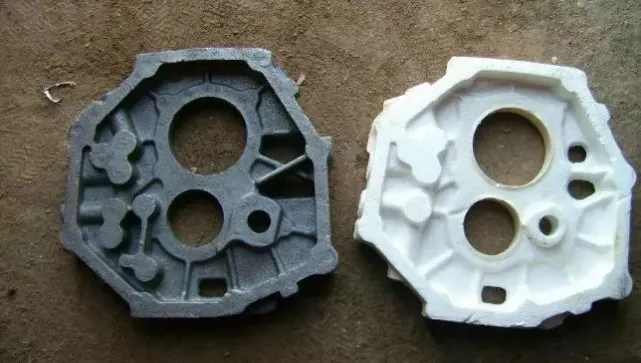
3. Practical Process Application Guidelines
1. Grain size selection: 40/70 mesh is the mainstream for general steel and iron castings; 70/140 mesh fine sand is recommended for thin-wall and precision castings to improve surface finish.
2. Vibration compaction control: Due to excellent fluidity, vibration time can be appropriately shortened to avoid over-compaction and reduced permeability.
3. Refractory coating matching: Cooperate with professional lost foam coating to form double anti-burn sand protection.
4. Recycled sand maintenance: Regular dust removal ensures stable permeability and consistent casting quality.
4. Suitable Casting Scope
Medium and high alloy steel castings, thick-wall ductile iron castings, hydraulic parts, automobile structural parts, engineering machinery castings and complex internal channel castings with high surface quality requirements. It is not necessary for simple low-demand gray iron small parts, where silica sand is more cost-effective.
5. Comprehensive Application Benefits
Although ceramic fused sand has a higher initial purchase price than silica sand, its ultra-low pulverization rate, high reclamation rate, low defect rate and greatly reduced cleaning workload effectively reduce the overall foundry operating cost. It is the ideal high-performance molding sand for high-end lost foam casting production lines.