
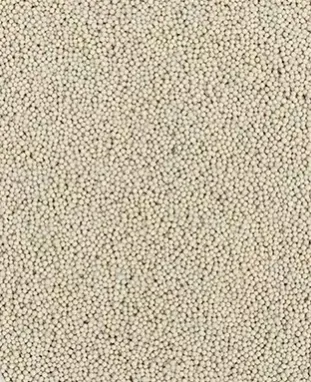

3D Printing Cermic Sand
Ceramic Sand For 3D Printing
Ceramic sand (also named ceramsite, cerabeads, ceramcast) is artificial spherical foundry grain produced from calcined bauxite, mainly composed of aluminum oxide and silicon oxide. Outperforming silica sand in multiple indicators, it has high refractoriness, low thermal expansion, good flowability and high reclamation rate, with strong resistance to wear, crush and thermal shock. Sintered ceramic sand works especially well for binder‑jet 3D printing in foundry production.
Specifications
- Average Fineness
- AFS85/AFS70
- Color
- White
- Refractoriness
- 1850 ℃
Ceramic sand, also known as ceramsite, cerabeads and ceramcast, is a high‑performance artificial spherical foundry grain manufactured by calcining bauxite. Its main chemical components are aluminum oxide and silicon oxide.Compared with conventional silica sand, ceramic sand delivers superior comprehensive performance for casting applications. It features high refractoriness, low thermal expansion, favorable angularity coefficient and outstanding flowability. Besides, it boasts great resistance to abrasion, crushing and thermal shock, as well as a high sand reclamation rate. In particular, sintered ceramic sand is highly suitable for 3D printing processes.
Project | 3D Printing Ceramic Sand |
AI2O3 | ≥50% |
SiO2 | ≤47% |
Fe2O3 | ≤2% |
Refractoriness | 1825℃ |
PH | 6.8-7.2 |
Refractoriness | ≤1.15 |
Bulk Density | 1.42-1.52 |