Buying Guide
Fused Ceramic Sand (Baozhu Sand) – Complete Guide for Steel, Iron & Non-ferrous Casting
Meta description: Fused ceramic sand from LLSC New Material. Spherical fused ceramic foundry sand for cast steel, cast iron and non-ferrous alloy casting. Low expansion, reusable, low dust. Check FAQ.
Introduction
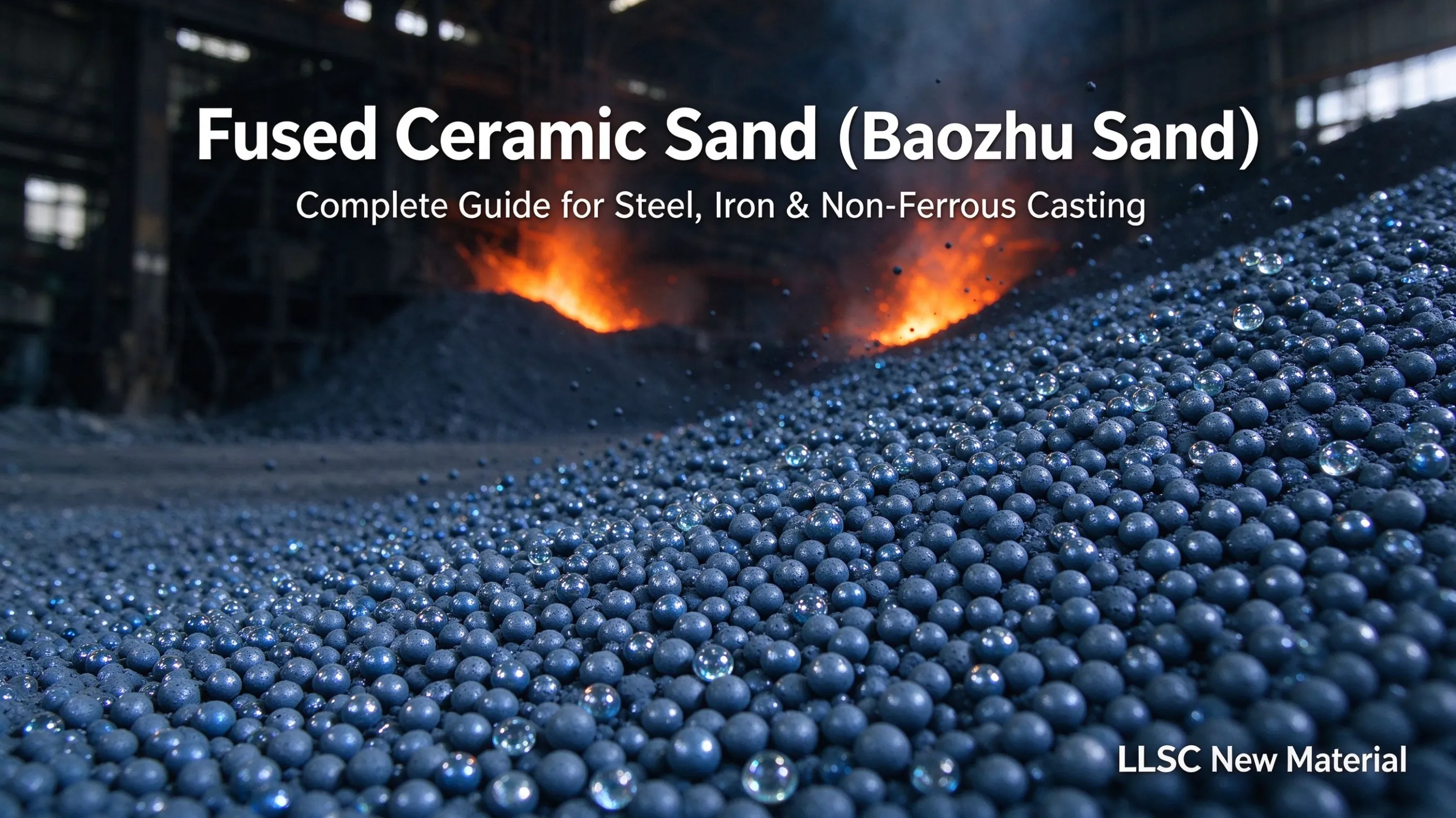
Fused ceramic sand, also known as Baozhu sand or ceramsite sand, is a high-performance eco-friendly foundry sand. It is manufactured from high-grade bauxite through calcination, electric fusion, granulation and sieving. With nearly spherical grains, it has become a popular facing sand and core sand for steel, iron and non-ferrous metal casting worldwide.
LLSC New Material supplies full mesh ranges of fused ceramic sand for foundries across the globe. Our ceramic sand features high refractoriness, low thermal expansion, high strength and excellent reusability, helping foundries reduce casting defects and cut binder consumption.
Key Advantages
✅ High refractoriness above 1800℃, chemically stable for cast steel, cast iron and non-ferrous alloys ✅ Near-perfect spherical shape, outstanding flowability and filling performance ✅ Low thermal expansion, effectively prevents veining and dimensional deviation ✅ High grain strength, low crushing rate, excellent sand reclamation performance ✅ Low dust, better workshop environment, environmentally friendly ✅ Good permeability, smooth gas discharge during pouring ✅ Compatible with resin, sodium silicate and other binder systems
Common Applications
- Resin sand casting
- Lost foam casting
- Shell molding & core making
- 3D printing binder jetting casting
- Facing sand for steel, iron, aluminum, copper alloy castings
FAQ
Q1: What is fused ceramic sand (Baozhu sand)? A: It is artificial fused ceramic sand made from bauxite by electric melting and granulation. Foundry workers also call it Baozhu sand or ceramsite sand. It is widely used as premium molding and core sand instead of silica sand, chromite sand and zircon sand.
Q2: Which casting metals is ceramic sand suitable for? A: It works well for cast steel, cast iron, aluminum alloy, copper alloy and other non-ferrous castings. It is especially recommended for high-precision and thin-wall castings.
Q3: Can fused ceramic sand be reused? A: Yes. Thanks to its high grain strength and low breakage rate, it can be recycled many times with proper sand reclamation equipment. It greatly lowers your new sand cost.
Q4: Can I mix ceramic sand with silica sand? A: Many foundries use ceramic sand as facing sand and silica sand as backing sand. But mixing them in one sand system is not recommended if you do sand reclamation, because their density and thermal properties differ.
Q5: What mesh sizes do you supply? A: LLSC New Material provides full series mesh grades, including 20-40, 30-50, 40-70, 50-100, 70-140, 100-200 mesh. We can also customize grading according to your sieve curve requirements.
Q6: Does ceramic sand reduce resin consumption? A: Yes. Its smooth spherical surface reduces the total surface area of sand grains. Most customers notice 20%-30% less resin addition compared to silica sand, while keeping mold strength.
Q7: Is ceramic sand safer than chromite sand? A: Yes. Fused ceramic sand contains no chromium, no risk of hexavalent chromium pollution. It is a green alternative for foundries facing strict environmental rules.
Q8: Can I get samples for testing? A: Yes. LLSC New Material provides samples for your casting trial test. We will supply COA and sieve analysis report together with each batch.
Closing
If you are looking for stable fused ceramic sand supplier for your steel, iron or non-ferrous casting line, contact LLSC New Material for technical data sheet, sieve table and quotation.