
Sep 1, 2026Technical Articles
Performance and Applications of Different Types of Sands in Sand Mold 3D Printing
and mold 3D printing drives the upgrading of traditional foundry industry. This paper analyzes the properties and applications of silica sand, ceramic foundry sand and chromite sand.
Performance and Applications of Different Types of Sands in Sand Mold 3D Printing
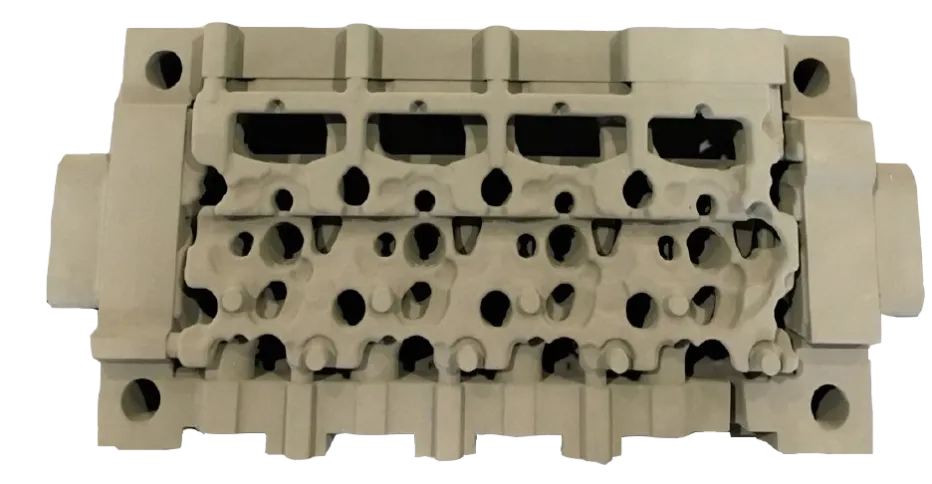
Driven by the wave of technological advances, 3D printing technology is reshaping the global manufacturing landscape at an unprecedented pace. Thanks to equipment upgrades and innovations in printable materials, sand mold 3D printing has become a core driving force for the transformation and upgrading of the traditional foundry industry.
This article introduces the performance and applications of different types of sands used in sand mold 3D printing.
1. Silica Sand
Basic Properties
Silica sand, also known as quartz sand, is refractory particulate matter dominated by quartz minerals with particle sizes ranging from 0.020 mm to 3.350 mm. It boasts excellent fire resistance, high-temperature stability and chemical stability.
Advantages in 3D Printed Sand Molds
- Relatively regular particle shape, which helps improve the evenness and continuity of printed lines;
- Moderate particle hardness, conducive to enhancing the strength and wear resistance of printed sand molds;
- Favourable thermal conductivity, which helps reduce thermal stress inside sand molds during printing;
- Abundant reserves and relatively low price, enabling cost reduction for 3D printed sand molds.
Characteristics of 3D Printed Silica Sand Products
- High precision: Uniform particle size of silica sand delivers high printing precision and low dimensional deviation of sand molds;
- Superior surface quality: Regular particle shape yields relatively smooth surfaces, facilitating subsequent grinding and coating;
- Balanced strength and toughness: By adjusting binder content and printing parameters, appropriate strength and toughness can be achieved to meet the demands of diverse application scenarios;
- Eco-friendly performance: Low dust generation during printing, improving workplace conditions and mitigating environmental pollution.
2. Ceramic Foundry Sand
Basic Properties
Ceramic foundry sand is an artificial ceramic-based sand with a refractoriness above 1800 °C. It features good air permeability, low angularity coefficient (≤1.1), perfectly rounded grains, and strong resistance to crushing during grinding.
Advantages in 3D Printed Sand Molds
- High strength and high compactness: Sand molds printed with ceramic foundry sand achieve 18% higher compressive strength than those made of silica sand, alongside greater compactness;
- Low gas evolution: Less gas is released under high temperatures, helping minimize porosity defects in castings;
- High reclamation rate: Its reclamation rate reaches 99.25%, noticeably higher than the 94.36% of silica sand;
- Environmental friendliness: As a green foundry material, it complies with environmental protection standards.
Characteristics of 3D Printed Ceramic Foundry Sand Products
- High refractoriness: Resists erosion by high-temperature molten metal and effectively prevents metal penetration, making it suitable for manufacturing large castings with complex internal cavities;
- Low thermal expansion rate: Restrains sand mold cracking during pouring and reduces veining defects;
- Excellent air permeability: Helps lower risks of porosity and sand inclusion defects in castings;
- High recyclability: It can be recovered and reused repeatedly to cut production costs;
- Good surface finish: Sand molds feature smooth surfaces, enabling castings to attain lower surface roughness.
3. Chromite Sand
Basic Properties
Chromite sand is a special foundry sand consisting of natural spinel dominated by chromite. After crushing, grinding and screening into specified grain sizes, it is widely used for castings prone to metal penetration. It possesses high refractoriness, low thermal expansion rate and good air permeability.
Advantages in 3D Printed Sand Molds
- High refractoriness: Its refractoriness far exceeds that of silica sand and ordinary ceramic foundry sand, making it especially suitable for high-temperature casting of stainless steel, high-manganese steel, nickel-based alloys and other materials;
- Favourable chilling performance: It accelerates casting solidification, refines grain structures, and improves casting hardness and wear resistance;
- Good recyclability: It can be recycled to lower production costs;
- Environmental friendliness: Low dust emission during application, improving working conditions and reducing environmental pollution.
Characteristics of 3D Printed Chromite Sand Products
- High precision: Sand mold 3D printing achieves higher precision and forming capacity compared with conventional molding using chromite sand;
- Strong adaptability: Its high refractoriness and outstanding chilling property suit the production of high-temperature alloy and high-wear-resistance castings for a wide range of applications.
With the continuous advancement of sand mold 3D printing technology, various sands are seeing ever-wider adoption in this field. From the low-cost silica sand, to highly air-permeable ceramic foundry sand, and chromite sand with remarkable chilling capacity, these materials jointly form a comprehensive "material toolbox" for manufacturing complex castings. Equipped with intelligent inkjet systems and dynamic parameter regulation, sand mold 3D printing equipment unlocks the full potential of these materials for practical production. Widely deployed in sectors including aerospace, this technology will deliver more efficient and precise solutions for the manufacturing of complex castings.