
Aug 14, 2026Technical Articles
Ceramsite Sand VS Silica Sand | Performance Comparison for Precision Foundry
Compare ceramsite sand and silica sand on grain shape, thermal expansion, binder consumption, defects, reclamation & cost. Find suitable molding sand for cold box, resin no-bake and precoated sand.
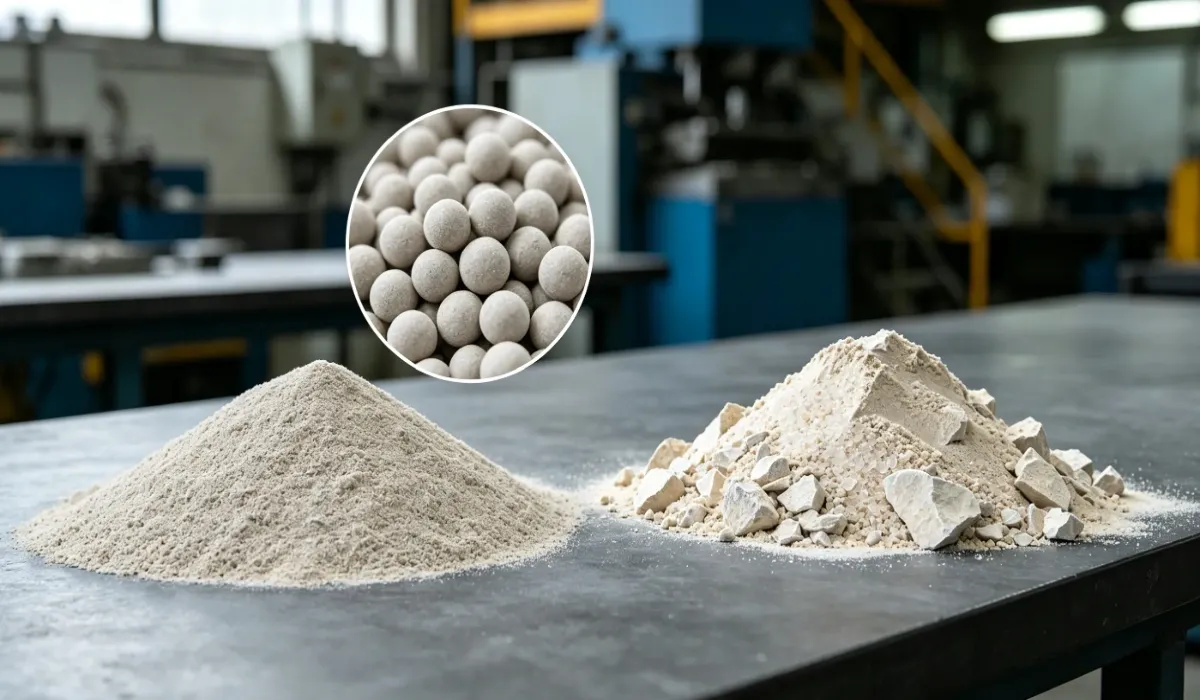
Ceramsite Sand VS Silica Sand Performance Comparison
Silica sand is the most widely used traditional molding sand due to abundant resources and low initial purchase cost. However, frequent casting defects restrict its application in high-end precision casting. Sintered ceramsite sand (fused ceramic sand) is a man-made spherical refractory sand made from bauxite via high-temperature calcination. More and more foundries choose ceramsite sand to upgrade production quality. This article makes a comprehensive performance comparison between ceramsite sand and silica sand.
1. Grain Shape & Angularity Coefficient
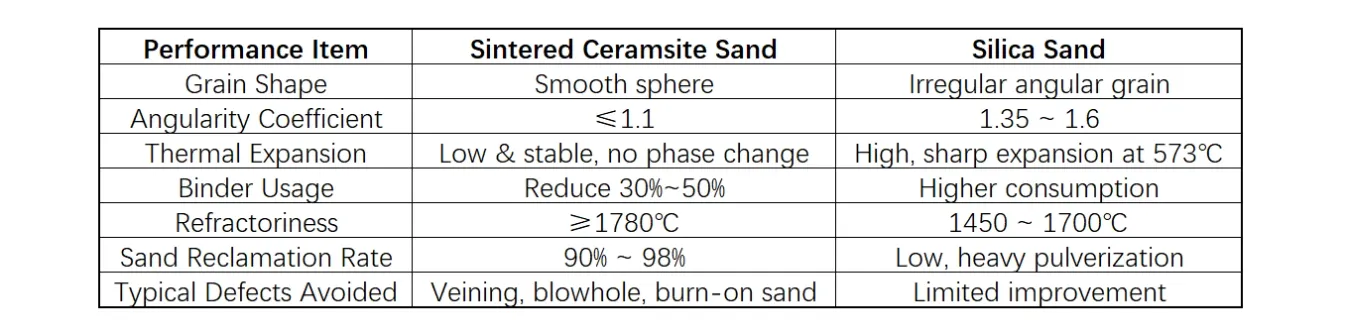
Sintered ceramsite sand features smooth spherical grains with an angularity coefficient ≤1.1. Low friction between grains brings excellent flowability, which can fully fill narrow, intricate thin-wall sand cores during shooting.Silica sand consists of irregular, angular particles. Its angularity coefficient ranges from 1.35 to 1.6. Sharp edges enlarge the specific surface area and hinder filling for complex cavities.
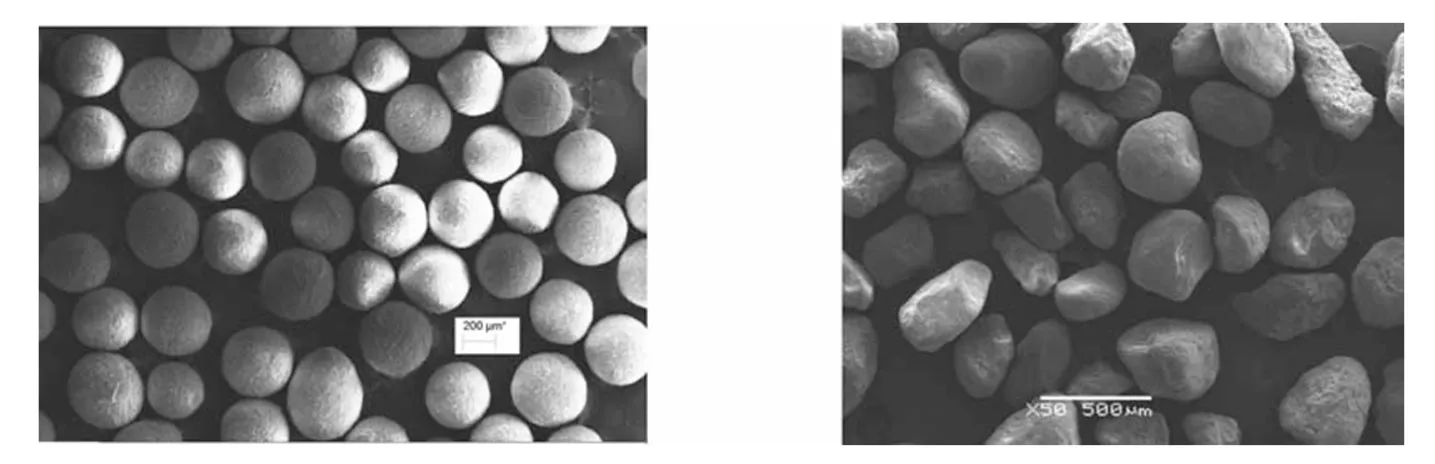
2. Thermal Expansion & High-temperature Stability
Ceramsite sand owns ultra-low and stable thermal expansion without phase change under high temperature. It effectively relieves thermal stress, greatly reducing veining, hot cracking and dimensional deformation of castings.Silica sand suffers sharp volume mutation caused by quartz phase transformation above 573℃. Large thermal expansion is the primary cause of veining, expansion cracks and dimensional inaccuracy, especially for steel and high-precision iron castings.
3. Binder Consumption & Gas Evolution
Thanks to small specific surface area, ceramsite sand can cut resin/binder consumption by 30%~50% to reach the same sand core strength. Less binder generates lower gas volume, minimizing blowhole and pinhole defects.Angular silica sand requires more resin to form complete coating films. Higher binder dosage leads to excessive gas evolution and higher risk of internal casting defects.
4. Refractoriness & Anti Burn-on Performance
Ceramsite sand refractoriness reaches above 1780℃, with stable chemical properties against molten metal erosion. It prevents chemical burn-on sand for steel and alloy castings.Ordinary silica sand has refractoriness around 1450~1700℃. It easily reacts with high-temperature molten steel, resulting in severe burn-on sand and heavy cleaning workload.
5. Reclamation Performance & Environmental Friendliness
Ceramsite sand grains are dense and hard, not easy to crush during mixing and regeneration. The recycling rate can achieve 90%~98%, cutting waste sand discharge. It produces less silica dust and lowers occupational health risks.Silica sand breaks easily after repeated thermal cycles. The reclamation rate is relatively low, producing massive waste sand. Respirable silica dust brings potential silicosis risks for workshop workers.
6. Shakeout Performance
Spherical ceramsite sand contacts in point-to-point mode inside cores. After pouring, sand cores collapse easily. It simplifies cleaning for deep cavities, long oil passage cores and complicated internal structures.Angular silica grains interlock tightly. The sand core is hard to break, increasing labor cost for casting cleaning.
Performance Comparison Table
7. Application Suggestion
✅ Choose Ceramsite Sand if you produce:Steel, alloy steel, high-precision ductile iron, hydraulic parts, engine cylinder heads, thin-wall complex castings; Processes: cold box, resin no-bake sand, precoated sand, 3D printed sand mold.✅ Choose Silica Sand if you produce:Ordinary aluminum castings, low-demand gray iron castings with simple structure, cost-sensitive mass production.
Conclusion
Ceramsite sand carries a higher unit price than silica sand, but reduces reject rate, binder cost, cleaning labor and waste sand treatment expense. For foundries pursuing stable high casting quality, ceramsite sand delivers better comprehensive economic benefits.If you want to know more about the practical application of ceramsite sand in different casting technologies, check our articles about ceramsite sand for cold box process, resin no-bake sand and precoated sand. Contact us for customized grain size solutions and free samples.